On this page
An Overview of Hiring Trends in Sweden

Sweden's recruitment landscape in 2026 is experiencing a fascinating paradox, while unemployment hovers around 8-9%, companies are desperately searching for the right talent. The mismatch between available workers and required skills has created a competitive hiring environment where recruiters must think strategically to secure top candidates. Understanding these evolving trends isn't just helpful; it's essential for staying ahead in Sweden's dynamic job market.
The Swedish labor market is undergoing profound transformation, driven by technological advancement, demographic shifts, and changing work preferences. For hiring managers and recruiters, these changes present both formidable challenges and exciting opportunities. The key to success lies in understanding where the market is heading and adapting your recruitment strategies accordingly.
Suggested: Check HR Email Templates here!
Overall Hiring and Job Market Growth in Sweden
Here’s where Sweden’s hiring landscape stands today:
- Sweden’s job vacancies dropped by 13% in mid-2025, with only 147,500 job openings available. Companies are becoming more selective about who they hire.
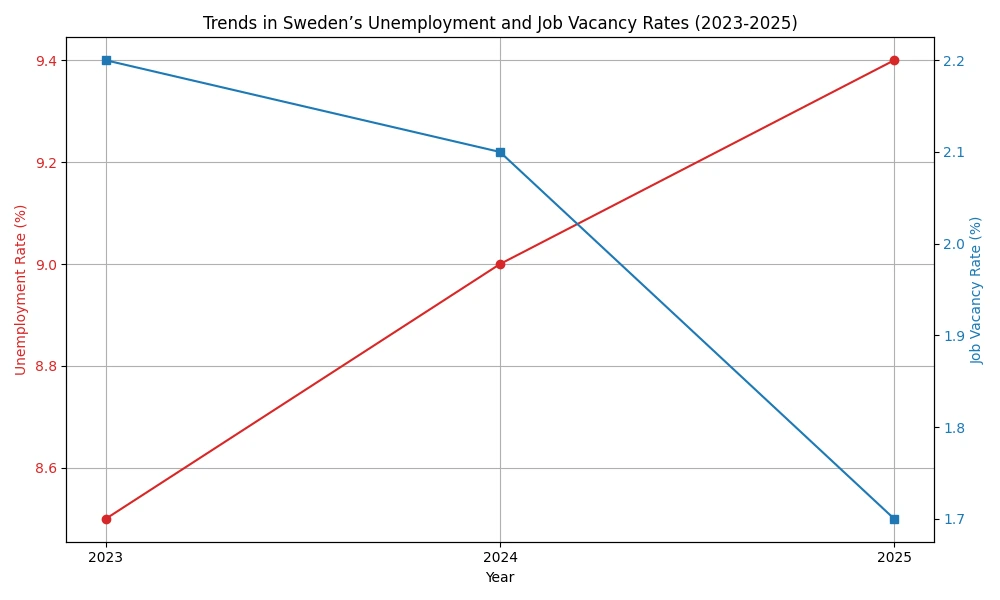
- At 9.4%, unemployment is not about a lack of peoplei, t’s a mismatch between the skills available and the job requirements.
- Decreased to 1.7%, meaning fewer vacancies and a tighter market for job seekers.
- 50% of job openings remain in key regions like Stockholm, Västra Götaland, and Skåne. If you’re only recruiting in Stockholm, you’re missing out on talent.
Suggested: Ways to Reduce Cost Per Hire
Skill Shortages and Niche Demands
Sweden's job market is facing a significant skills gap, especially in tech, data science, and sustainability. Recruiters are scrambling to find the right talent, but here’s the kicker, it’s no longer just about offering a paycheck. Today’s candidates are seeking a good company culture, flexibility, and purpose.
- Key Insight:
If your employer brand doesn’t stand out, you’ll lose out to competitors. Job seekers now prioritize work-life balance, inclusivity, and growth opportunities.
- Challenge:
A 13% drop in job vacancies from last year means companies are more selective than ever. The message? You need to get proactive if you want to secure the talent you need.
Suggested: What Is a Talent Pipeline?
When to Recruit and When to Relax
Don’t just recruit when a position opens. Recruit when the talent pool is most active. In Sweden, that's during the autumn and spring hiring seasons. Here’s why:
- Best Time to Hire:
Job seekers are most active in autumn and spring, and hiring budgets are often refreshed during these times.
- Off-Peak:
Winter may be quieter, but it’s the perfect time to plan ahead, refresh your strategies, and prepare for the upcoming hiring surge.
- Geography Matters:
While Stockholm is the hub, nearly 50% of job openings are outside of the capital, in regions like Västra Götaland and Skåne. Make sure you’re not missing out on talent outside the city.
Suggested: Top Candidate Screening Tools for Recruiters
Flexibility is Non-Negotiable
Flexible work isn’t just a nice-to-have anymore, it’s an essential part of your recruitment strategy. Here’s why:
Gone are the days when flexible work was merely a perk. Today, it’s a must-have. Offering hybrid or remote work is no longer an option; it's a necessity if you want to attract top-tier talent. Swedish job seekers prioritize work-life balance, and if you can’t deliver, your competitors will.
Here’s the kicker: offering flexibility means you’re not just hiring employees, you’re attracting professionals who value their time as much as their careers. It’s a win-win.
Digital Tools and Data-Driven Recruitment
If you're still relying on outdated recruitment methods, you're at a disadvantage. Modern hiring managers are using technology and data to streamline their processes:
- AI in Recruitment:
Use artificial intelligence to speed up the screening process, improve candidate matching, and reduce biases.
- Data-Driven Decisions:
Moving away from Excel sheets? Good idea. Leveraging recruitment software and data analytics helps you hire faster and smarter.
- Passive Candidate Engagement:
Don't wait for the perfect candidate to apply. Engage with potential talent year-round, even when you’re not actively hiring.
Suggested: Effective Ways to Reduce Time to Hire and Time to Fill
Trends in Sweden’s Job Market (2023-2025)
The graph below highlights the shifting trends in Sweden’s unemployment and job vacancy rates from 2023 to 2025. Notice how, while unemployment is rising, job vacancies are decreasing. This presents a clear challenge: fewer vacancies available means more competition to fill roles. Recruiters must be strategic in how they approach talent sourcing and hiring.
Trends and Actionable Takeaways
- Target Niche Talent:
Focus on recruiting for high-demand tech and data roles. Be sure your job descriptions are crystal-clear and highlight the specific skills you’re after.
- Strengthen Employer Branding:
Highlight flexible work, inclusivity, and work-life balance in your job ads. Show that your company prioritizes both career growth and personal time.
- Leverage Data & AI:
Use AI tools for screening and candidate engagement. Integrate data-driven solutions to streamline the hiring process and make quicker, smarter decisions.
- Optimize Hiring Timelines:
Focus your recruitment efforts in autumn and spring when job seekers are most active. Use off-peak periods like winter to fine-tune your approach.
- Expand Geographic Reach:
Don’t just focus on Stockholm. Seek out candidates in regions like Västra Götaland and Skåne where there are a growing number of opportunities.
Suggested: HR Terms That Every Recruiter Should Know
Conclusion
The trends shaping Sweden's 2026 recruitment landscape will likely intensify rather than reverse. Skills shortages in technical fields will persist as technology continues advancing faster than education systems adapt. Flexible work arrangements will become standard expectations rather than differentiators. Regional opportunities will expand as digital infrastructure enables more distributed work models.
Stay connected to industry trends, invest in understanding candidate motivations, and build recruitment processes that respect professionals' time and intelligence. The companies that view recruitment as a strategic function rather than an administrative task will build the teams that drive Sweden's economic future.
Suggested: Why Quality Talent Is Harder to Find Than Ever

.webp)